Practical crypto education
Crypto guides.
Clarity before the next step.
Understand trading costs, wallet permissions and network choices. Browse illustrated articles or jump to a calculator’s worked example.
25 articles · 15 tool explanations
No matching resources. Try a shorter phrase or clear the filters.
Wallets, stablecoins & transfer safety
Articles
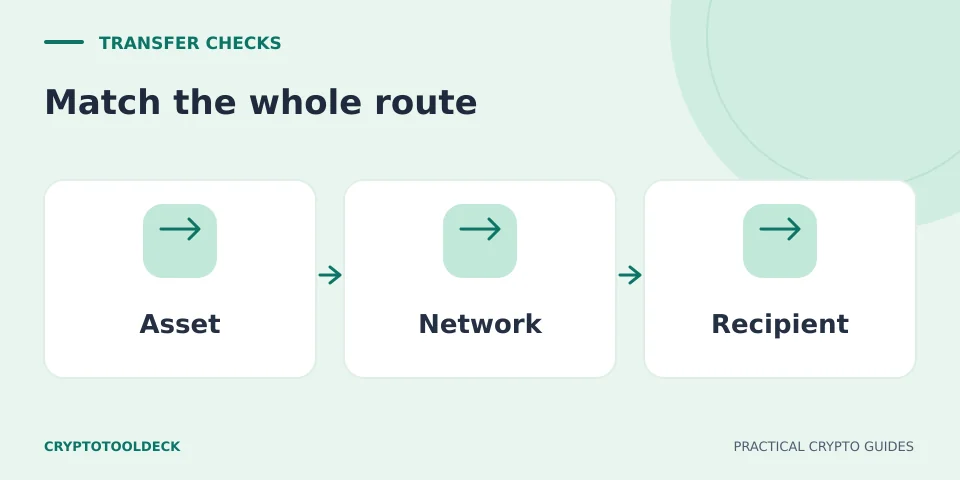
Check the network before sending USDT
Match the receiving instructions, then check the address, minimum and fees.
Article · Transfer checklist Read the guide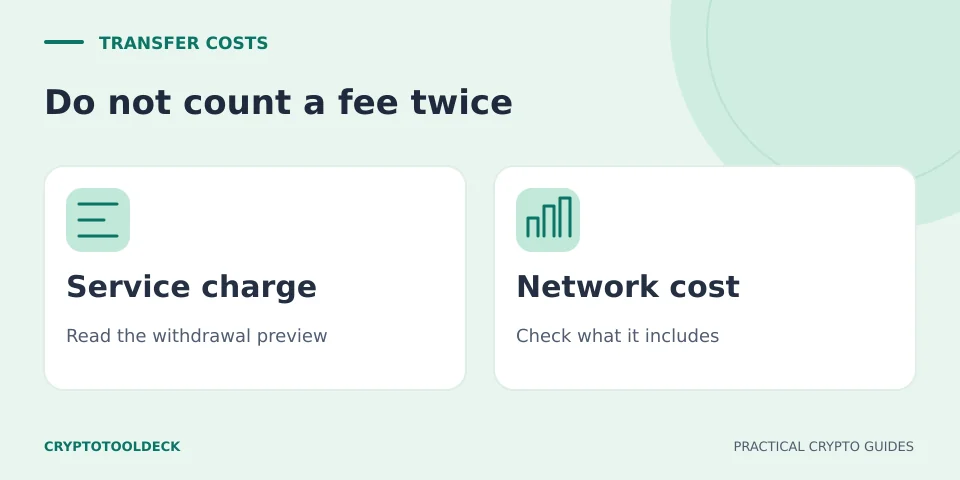
A withdrawal fee is not always the network fee
Reconcile the platform preview, wallet debit and expected recipient amount without double-counting.
Article · Practical guide Read the guide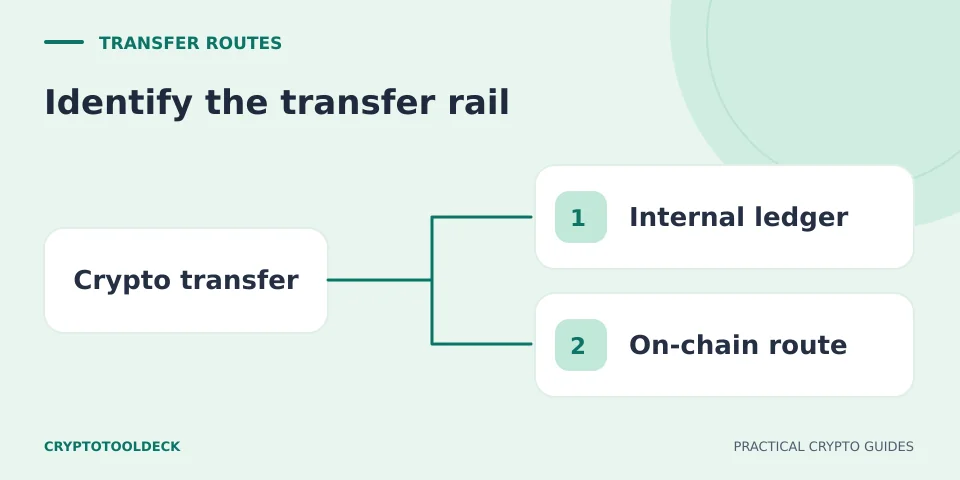
Not every crypto send creates a blockchain transaction
Identify the transfer rail before looking for a transaction hash or comparing network fees.
Article · Practical guide Read the guide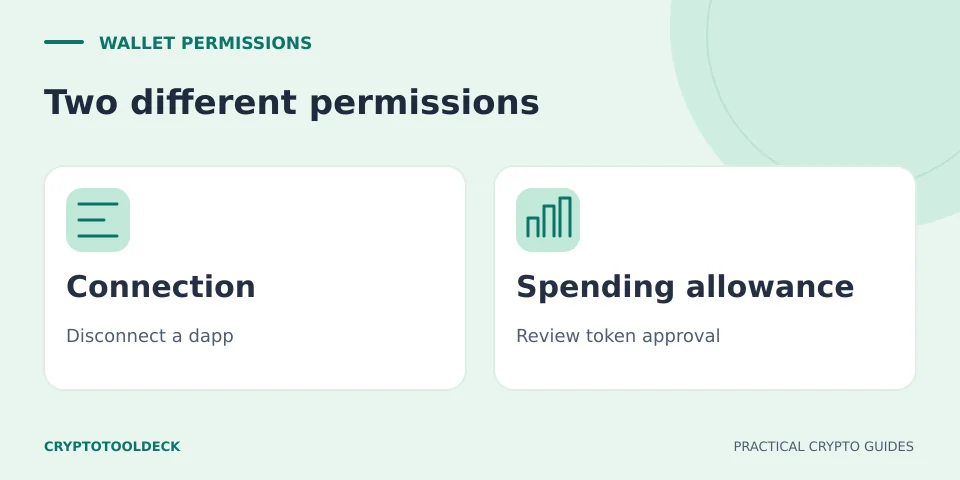
Disconnected does not mean approval revoked
Separate wallet connections from spending permissions and understand the limits of revoking.
Article · Safety guide Read the guide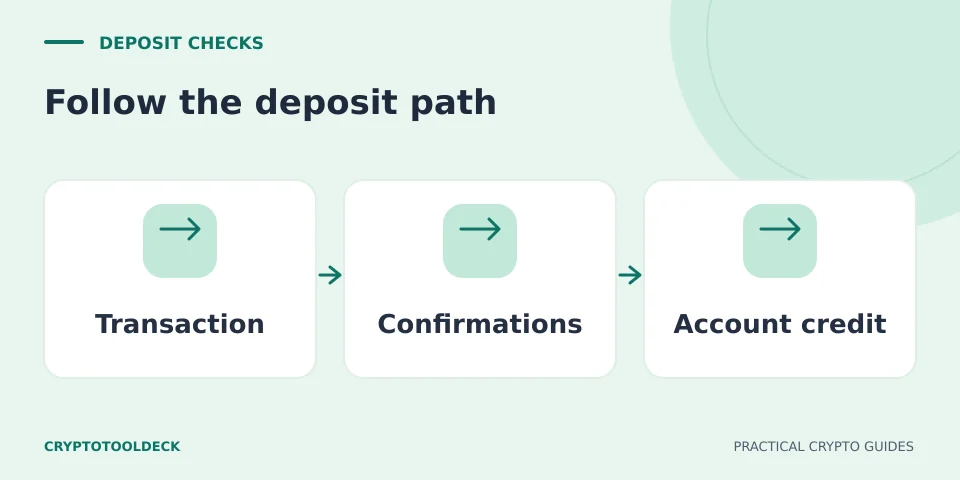
Confirmed on-chain, missing from the account
Work through a post-send checklist and prepare a useful support request.
Article · Practical guide Read the guide
Check the claim before trusting the group
Spot risky deposit requests and understand what profit screenshots cannot prove.
Article · Practical guide Read the guide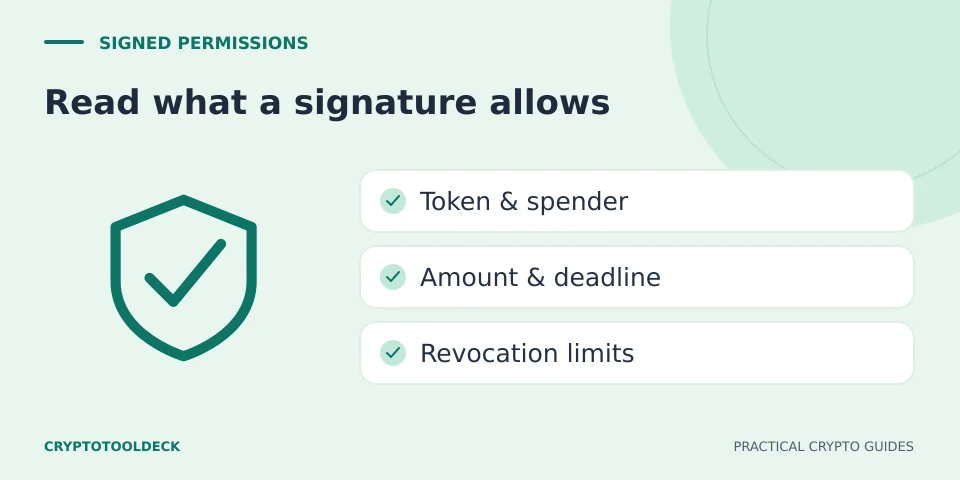
A signature can authorise spending without a gas payment
Check the permission, amount, spender and deadline—not just the button label.
Article · Practical guide Read the guide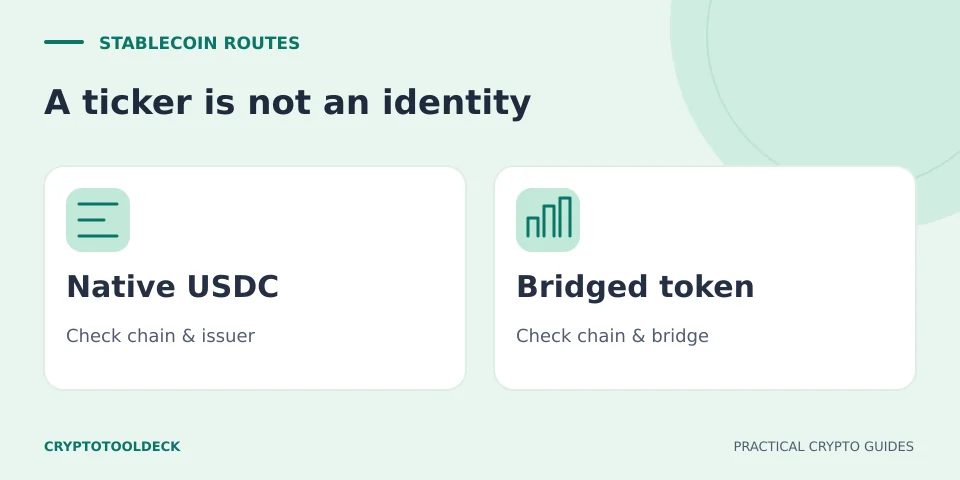
Two USDC labels can refer to different tokens
Match the chain, contract and receiving instructions before moving funds.
Article · Practical guide Read the guideTrading costs, execution & risk
Articles
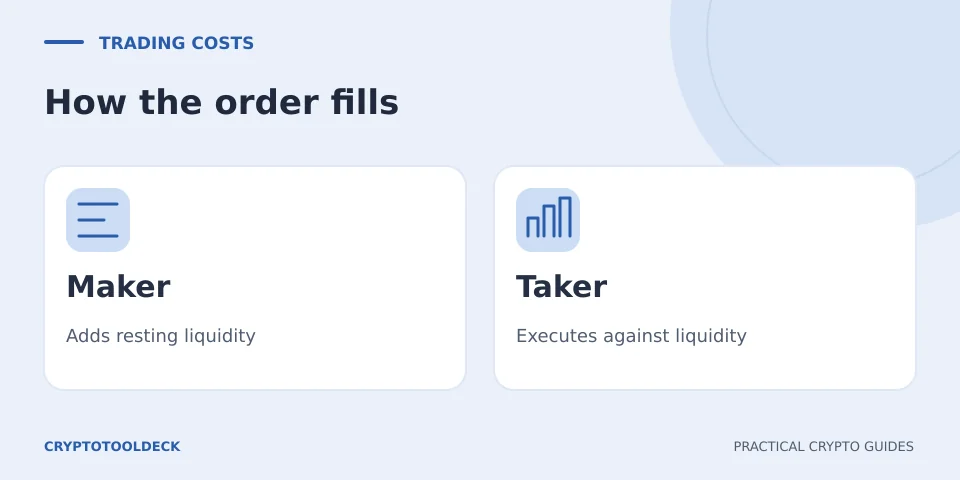
When a limit order is still a taker
Compare resting orders, crossing the spread and mixed maker/taker fills.
Article · Practical guide Read the guide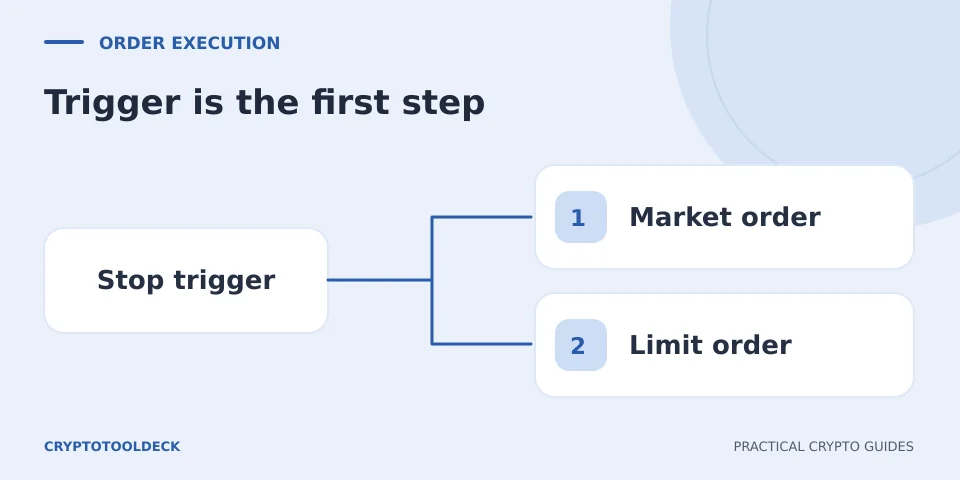
A triggered stop is not a guaranteed exit
Separate the trigger, order type and fill price before relying on a setup.
Article · Practical guide Read the guide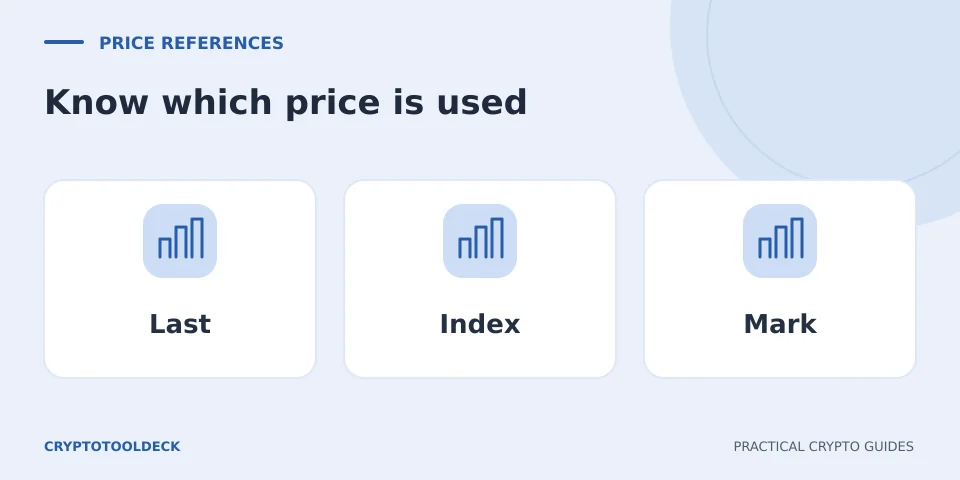
Why the chart and liquidation price can disagree
Check the price reference, trigger source and margin mode—not just the candle.
Article · Practical guide Read the guide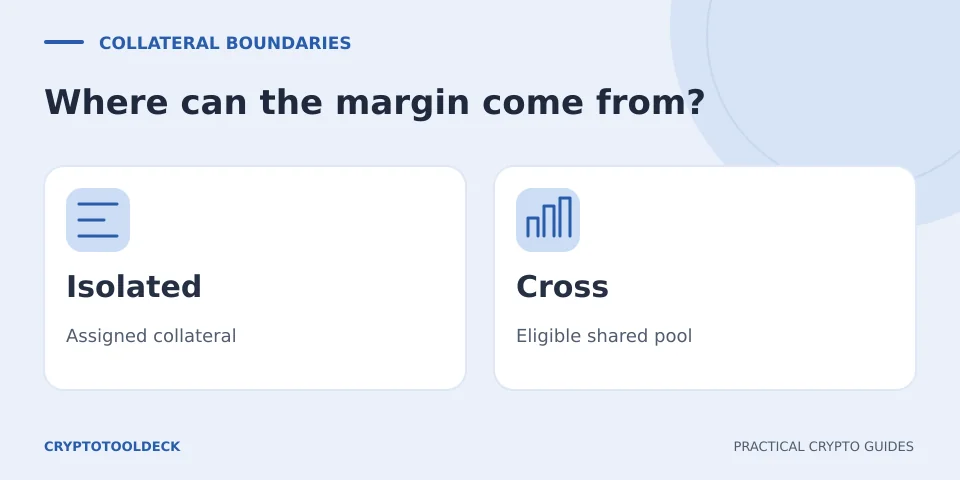
Which balance is actually backing the trade?
Check collateral boundaries and automatic top-ups before relying on a margin label.
Article · Practical guide Read the guide
A contract count is not always a coin quantity
Read settlement units and multipliers before choosing a P&L formula.
Article · Practical guide Read the guide
An old exit order can become the wrong trade
Check remaining size, closing intent and order behaviour after partial exits.
Article · Practical guide Read the guideTool explanations
Turn a risk budget into position size
Follow the BTC example and check what an exact-stop-fill assumption leaves out.
Tool explanation · Worked example See the worked exampleFill average is not fee-adjusted cost
Compare buy fees paid in quote currency with fees deducted from the purchased coin.
Tool explanation · Worked example See the worked exampleWhat remains after both sides of the trade pay fees?
Reconcile a full spot buy and sale, cash returned and fee-adjusted break-even.
Tool explanation · Worked example See the worked exampleWho pays when the funding rate changes?
Keep long/short payments and receipts separate across a settlement worksheet.
Tool explanation · Worked example See the worked exampleLeverage changes the denominator, not the same trade twice
Separate fixed coin quantity from margin-based sizing, then reconcile fees and funding.
Tool explanation · Worked example See the worked exampleTargets, partial exits & sharing
Tool explanations
Why three targets are not three profits
Compare independent full-position exits without adding mutually exclusive outcomes.
Tool explanation · Worked example See the worked exampleWhat happens after the first target fills?
Follow a 50/30/20 exit plan through fees and a reversal to the original stop.
Tool explanation · Worked example See the worked exampleShare a setup without losing the context
Keep entry, stop, targets and risk labels together on Telegram or WhatsApp.
Tool explanation · Formatting guide See the worked exampleSwaps, execution & network fees
Articles
Price impact is not your slippage setting
Separate the cost already in the quote from the movement you allow afterwards.
Article · Practical guide Read the guide
A failed swap and a gas charge can both be real
Read the receipt before retrying, and keep approvals separate from swaps.
Article · Practical guide Read the guideTool explanations
Your max fee is not automatically your bill
Separate gas used, effective gas price and the fee ceiling.
Tool explanation · Worked example See the worked exampleWhat does minimum received actually mean?
Compare two tolerance conventions and the effect of token-decimal rounding.
Tool explanation · Worked example See the worked exampleMarket cap & token supply
DeFi liquidity, staking & compounding
Articles
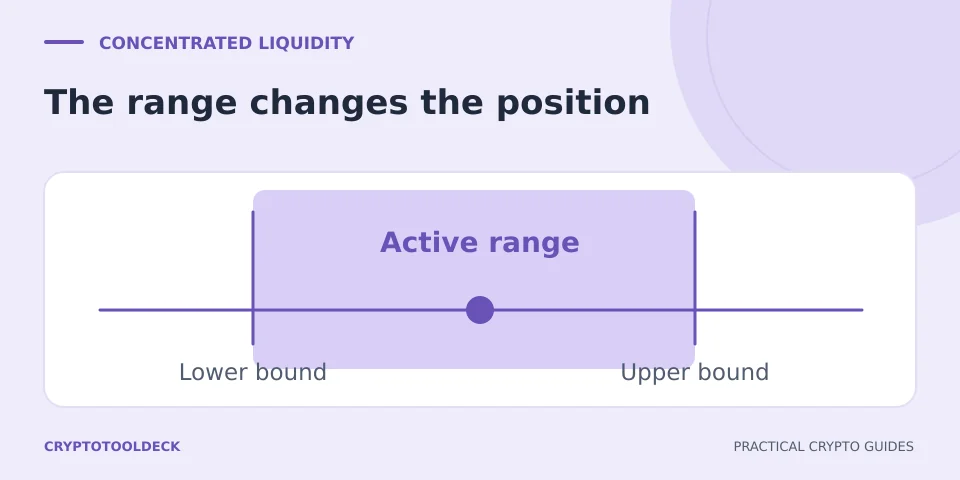
A 50/50 calculator cannot model a chosen price range
Check whether liquidity is active and which token remains before interpreting an LP result.
Article · Practical guide Read the guide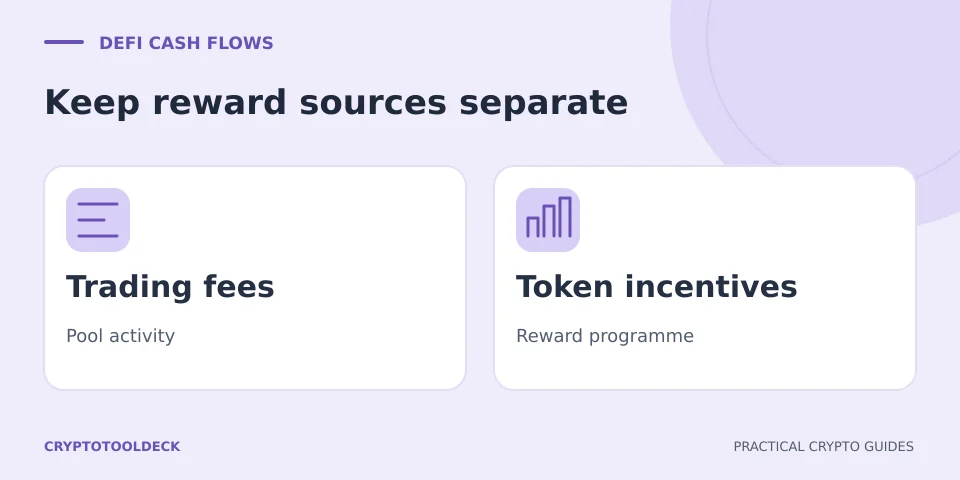
Two reward lines can carry different risks
Track trading fees, incentive tokens, price changes and transaction costs as separate cash flows.
Article · Practical guide Read the guide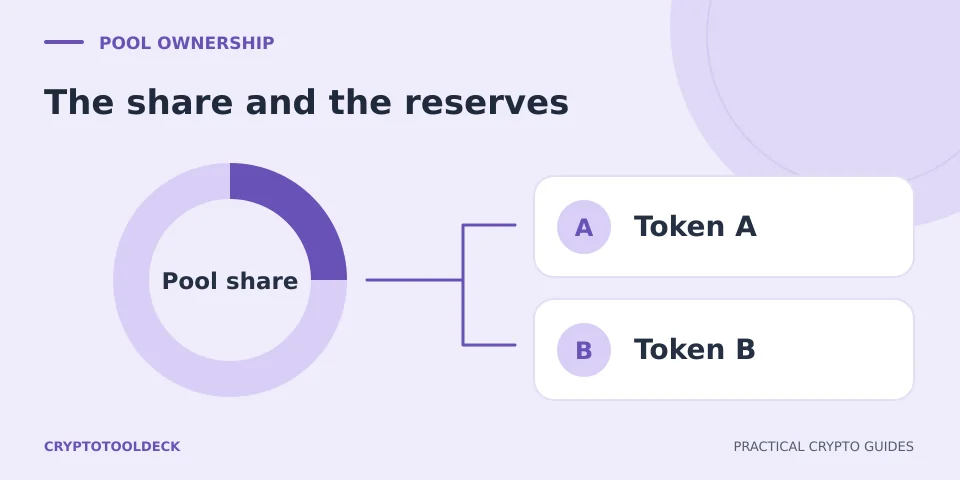
Your pool percentage and token quantities can both move
Separate the ownership record from the reserves it represents and the value marked at current prices.
Article · Practical guide Read the guide
More tokens do not automatically mean more value
Keep reward units, market price and costs in separate parts of the calculation.
Article · Practical guide Read the guide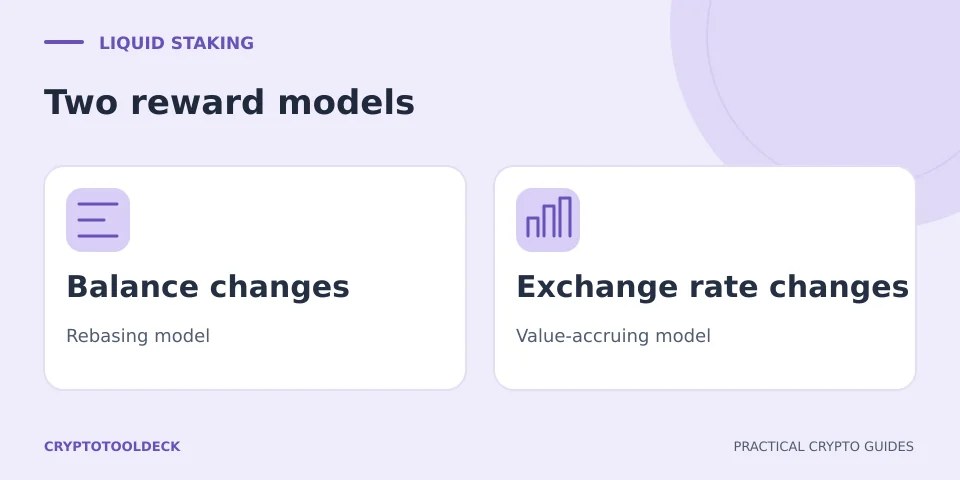
A fixed wstETH balance can represent a changing amount
Read the token units and conversion ratio before calculating rewards.
Article · Practical guide Read the guideTool explanations
Compare a full-range 50/50 LP position with holding
Follow the token quantities, relative price change and separately entered fees or incentives.
Tool explanation · Worked example See the worked exampleConvert a rate without counting compounding twice
Follow APR to APY and the reverse calculation under a constant-rate model.
Tool explanation · Worked example See the worked exampleBitcoin mining: power, rewards & diagnostics
Articles
The same miner can earn a different amount over time
Separate network difficulty, estimated hashrate and revenue assumptions.
Article · Practical guide Read the guide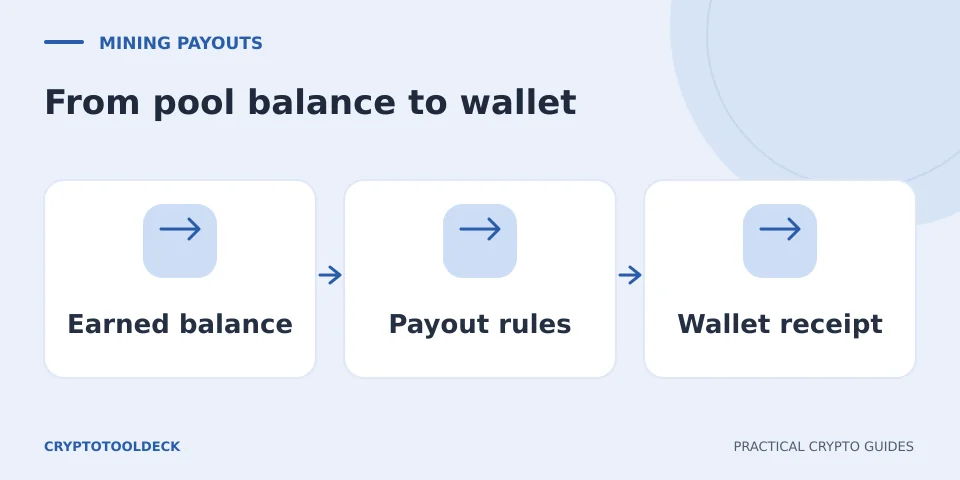
A pool fee does not describe the whole payout
Compare reward basis, variance, credited balance and withdrawal conditions.
Article · Practical guide Read the guide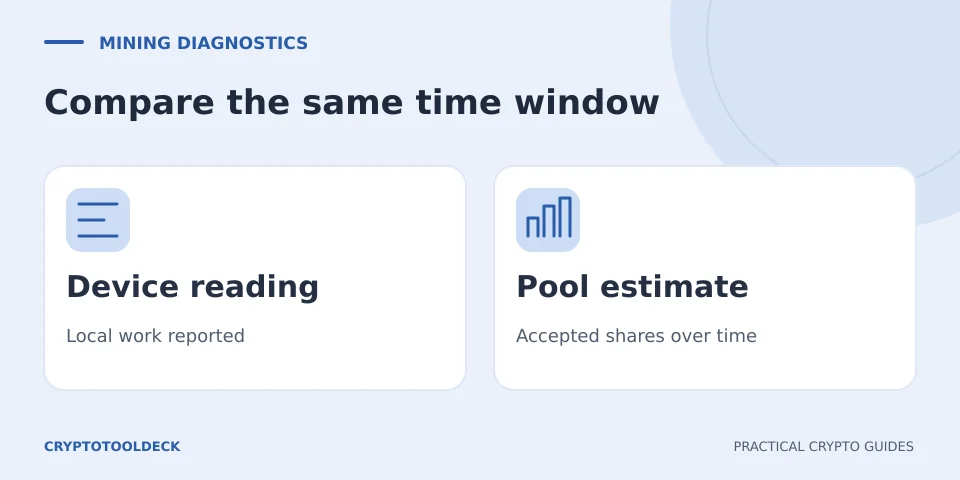
Two hashrate displays can measure different things
Match the time window and check accepted work before drawing a conclusion.
Article · Practical guide Read the guide