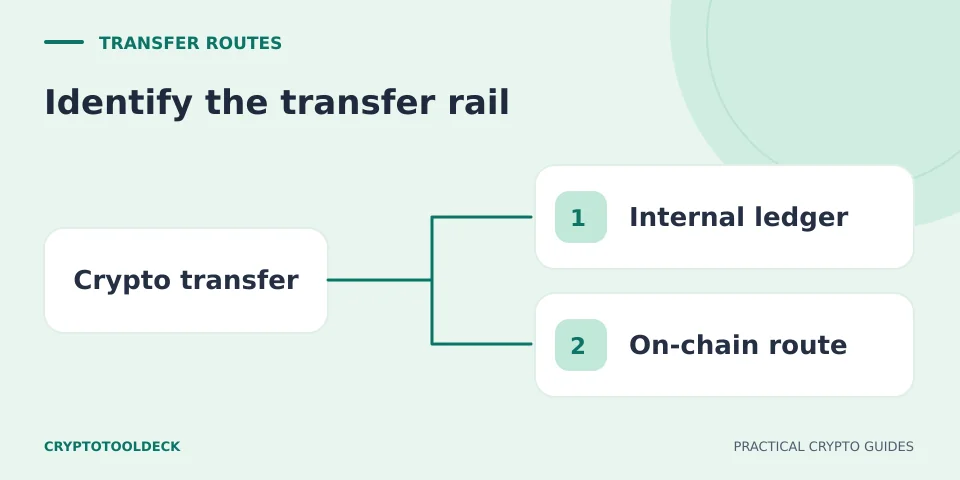
A crypto-labelled transfer can move value inside a provider’s own ledger or broadcast a transaction to a blockchain. These routes leave different evidence, use different identifiers and may have different fees and recovery limits.
Identify the rail before searching an explorer
An on-chain withdrawal sends to a blockchain address and, once broadcast, should produce a transaction identifier on that network. An internal or off-chain transfer updates records controlled by the provider. It may use an email address, username, account identifier or another provider-specific destination and may not appear on a public explorer.
Coinbase’s send documentation is one concrete example: it distinguishes irreversible on-chain sends to external addresses from off-chain sends to another Coinbase user, which do not appear on the blockchain. Those details describe Coinbase’s product; other providers can use different names, limits and fees.
| Check | Internal provider transfer | On-chain withdrawal |
|---|---|---|
| Destination | Provider account identifier | Network address, sometimes plus memo/tag |
| Public transaction hash | Usually none | Expected after broadcast |
| Network selection | May be abstracted or unavailable | Must match recipient support |
| Primary evidence | Provider transfer record | Provider record plus network explorer |
“Free” does not mean interchangeable
An internal route may avoid an on-chain fee because the provider is changing its own ledger rather than creating a public transaction. That does not make it a universal substitute for withdrawal to self-custody. The recipient must be reachable through the same internal system, and both users remain dependent on the provider’s account rules.
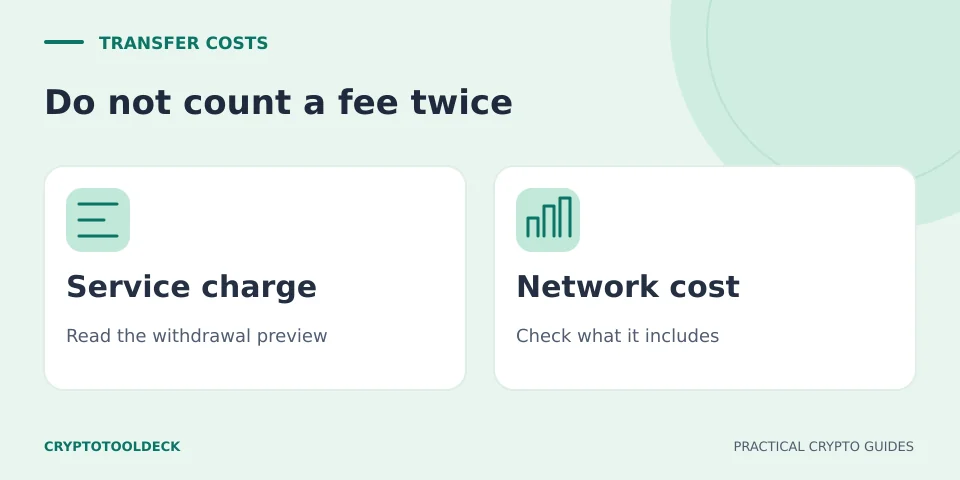
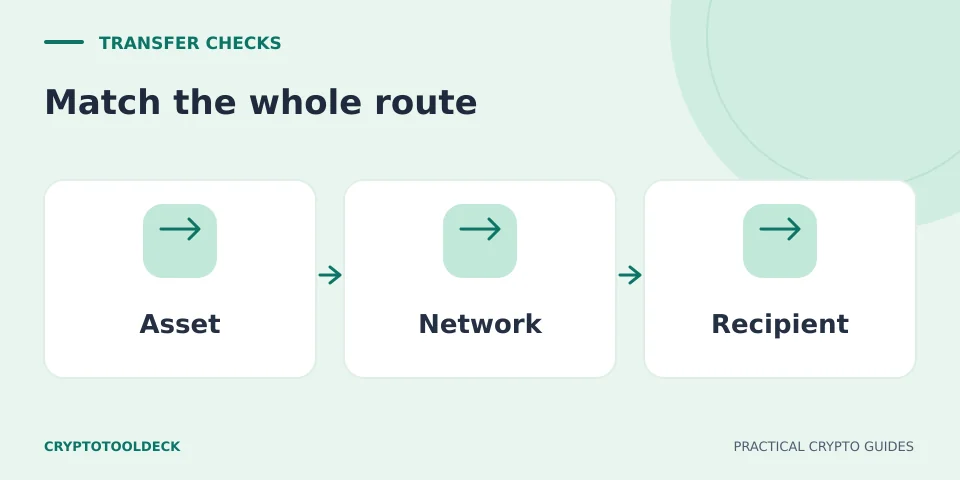
Conversely, an on-chain route can reach a compatible external wallet, but it requires the correct asset, network and destination details. Coinbase Exchange notes that off-platform crypto transfers can involve estimated network-fee charges. Check the final screen for your own provider rather than transferring that rule to every platform.
Troubleshoot from the route actually used
If an internal transfer is missing, a public explorer cannot find a transaction that was never broadcast. Use the provider’s transfer reference and official support channel. If an on-chain withdrawal is pending, first determine whether the provider has supplied a transaction hash. “Pending in the exchange” and “pending on the network” are not the same state.
A completed on-chain transaction proves that the network processed the encoded transfer. It does not prove that an exchange credited the deposit, that the intended account was referenced by a required memo, or that the token contract was supported. For that case, continue with confirmed on-chain but not credited.
Use cost as a later filter
First determine which routes can deliver the accepted asset to the intended recipient. Then compare the sender debit, recipient amount, minimum and separate fees. The transfer-fee worksheet deliberately does not decide whether an internal or on-chain route is suitable.
Educational information, not a wallet audit, transaction validation or personalised financial advice. Service support and interfaces can change. Report an error with the page URL; never send recovery phrases or private keys.